
Reading is one of the most important skills children develop in their early years. Before they can read full sentences, they must first understand how letters create sounds. Through phonics instruction, children learn to match letters with their corresponding sounds, which enables them to read words progressively. Parents can better support their children's reading development at home when they learn about the sounds of the phonics system.
Many parents today look for ways to strengthen early literacy skills outside school. The combination of consistent reading activities and basic phonics exercises together with structured learning sessions creates significant progress. Some families also select a phonics class in Tenkasi where children receive structured phonics lessons while parents continue reinforcing learning through daily practice at home.
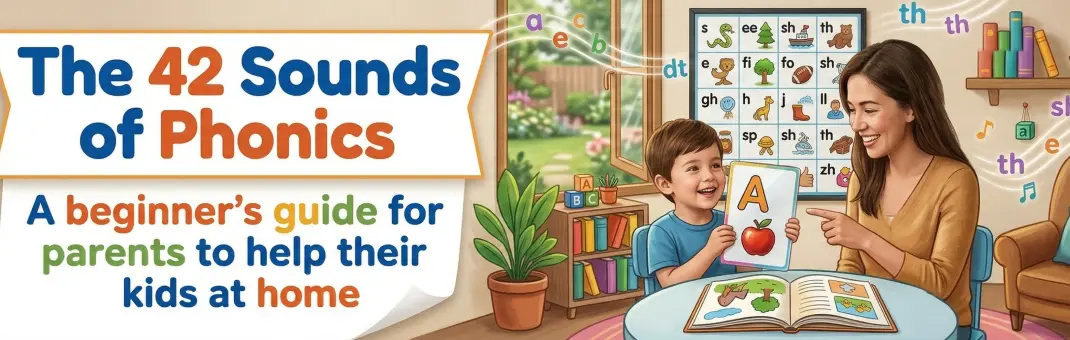
The English language consists of 26 letters, which combine to create 42 distinct sounds known as “phonemes”. Phonics learning starts with these sounds which teach students basic skills to construct words. Children who learn the sounds of phonics develop pattern recognition skills for words, which helps them decode new words.
Children learn to break down words into basic sounds through phonics. The method improves reading abilities and helps students pronounce words correctly. The phonics class at Tenkasi teaches children to read through sequential instruction of specific sounds.
The 42 phonics sounds are divided into seven groups to make learning easier for children. Each group introduces new sounds gradually so kids can practice blending them into simple words.
Many parents believe that children need to learn the entire alphabet before they can start reading. However, phonics teaching begins with sound instruction because spoken language construction depends on sound elements.
The sounds of the phonics system help children learn word construction through their first phonics sound recognition. The learners acquire a reading system that enables them to master new vocabulary instead of studying each word through memorization.
This approach is widely used in early education programs. Parents who want their children to receive professional support often enroll them in a phonics class in Tenkasi, where trained educators guide children through sound recognition and blending exercises.
The impact of parental support on phonics learning extends beyond the school classroom. Daily reading practice for just a few minutes brings positive results for a child.
The following methods are effective for learning:
These simple activities can make phonics learning enjoyable while strengthening reading skills.
Children learn best when lessons are interactive and engaging. Turning phonics practice into games can make learning more enjoyable.
These activities reinforce the sounds of phonics while making learning playful and memorable.
Although parents want to help their children succeed, some common mistakes can slow down phonics learning.
Learning the correct sounds of phonics early helps prevent these challenges.
Parents frequently wonder about their child's progress with phonics learning. Multiple indicators exist which show signs of progress.
| Phonics Group | Sounds Included | Learning Purpose |
|---|---|---|
| Group 1 | s, a, t, i, p, n | First sounds children learn; helps form simple words like ‘sat’ and ‘pin’. |
| Group 2 | c, k, e, h, r, m, d | Expands vocabulary and helps children read more simple words. |
| Group 3 | g, o, u, l, f, b | Helps children practice blending sounds into short words. |
| Group 4 | ai, j, oa, ie, ee, or | Introduces vowel combinations commonly used in English. |
| Group 5 | z, w, ng, v, oo, oo | Helps children recognize longer sounds and pronunciation patterns. |
| Group 6 | y, x, ch, sh, th, th | Introduces common digraph sounds found in everyday words. |
| Group 7 | qu, ou, oi, ue, er, ar | Completes phonics learning and helps children decode complex words. |
These milestones show that phonics learning is working effectively.
Children need different time periods to learn phonics sounds. Some children make progress after three months, while others need additional time to learn based on their practice and exposure.
Consistency is the key to success. Success requires people to practice their skills every day. The combination of daily home phonics practice with structured lessons will help students learn at a faster pace.
Parents who want additional guidance often consider enrolling their children in a phonics class in Tenkasi where educators provide systematic phonics instruction and regular practice sessions.
Phonics and sight words are both essential elements that contribute to reading development. Phonics teaches children how to decode words using sounds, whereas sight words consist of frequently used terms that children learn to identify through memory recognition.
the, is, was, you, said
When children understand the sounds of phonics, they can decode unfamiliar words rather than relying solely on memorization. Combining phonics instruction with sight word recognition creates a balanced reading approach.
Parents do not need long study sessions to support phonics learning. A short daily routine can be very effective.
The basic weekly schedule should include:
This routine helps reinforce the sounds of phonics in a relaxed and enjoyable way.
Phonics learning does more than teach children how to read. It also improves spelling, pronunciation, and vocabulary development. Children who master phonics early often feel more confident when reading in school. Students can read unfamiliar words by themselves and understand texts more easily.
The phonics class at Tenkasi provides structured learning environments that deliver continuous support where children receive consistent guidance and practice.
Helping children learn phonics is one of the most valuable investments parents can make in their education. When children understand how sounds form words, they gain the confidence to explore reading on their own.
Home practice together with encouraging curiosity and enjoyable learning activities successfully helps parents to support their children's reading development. Learning Town provides children with phonics training that follows a structured system that enables your child to learn through enjoyable and effective educational methods.
The program offers young learners structured lessons and interactive activities that help them build their phonics knowledge and reading abilities. Structured learning opportunities in our phonics class in Tenkasi can strengthen your child’s foundation. Enroll today and help them master phonics step by step at Learning Town.
If you're looking for a fun, engaging way to help your child become a confident, skilled reader and writer, look no further than our phonics class!
Copyright 2023 © Learning Town. Designed by SBBS.